| Posted at 07:10 AM on March 02, 2010 |
comments (0)
|

Keeping your home fresh and clean in an environmentally green way is easier and cheaper than you may think. Most of us, of course, are familiar with using vinegar, borax, lemons and other similar products to keep our home smelling fresh and clean. But for added oomph, we can use common household products and ingredients much the same way that thrifty cooks did to reuse odd bits and pieces of produce such as celery tops, carrot peels, onion skins, and fish heads to produce yummy stocks and soups.
You can use the kitchen bits and bobs as well as expired produce to do the same for cleaning and housekeeping (just as long as they’re not mouldy or smelly, natch!) as a lot of store-bought chemicals. For example, lemon and orange peels can be used to scour out those tea and coffee stains in your cups or to keep your sugar from hardening. That box of expired baking soda in the fridge can be reused as a base for scouring your countertops (just add a little warm water) or unplugging a plugged out drain. A wad of stale white bread can be used like an eraser to remove dirt marks or spots from walls. Tea leaves and coffee grounds also have lots of reuses (for example, to add texture to potting soil).
So before you toss out those kitchen bits into the compost bin, find ways to reuse them first.
| Posted at 07:44 AM on February 22, 2010 |
comments (0)
|
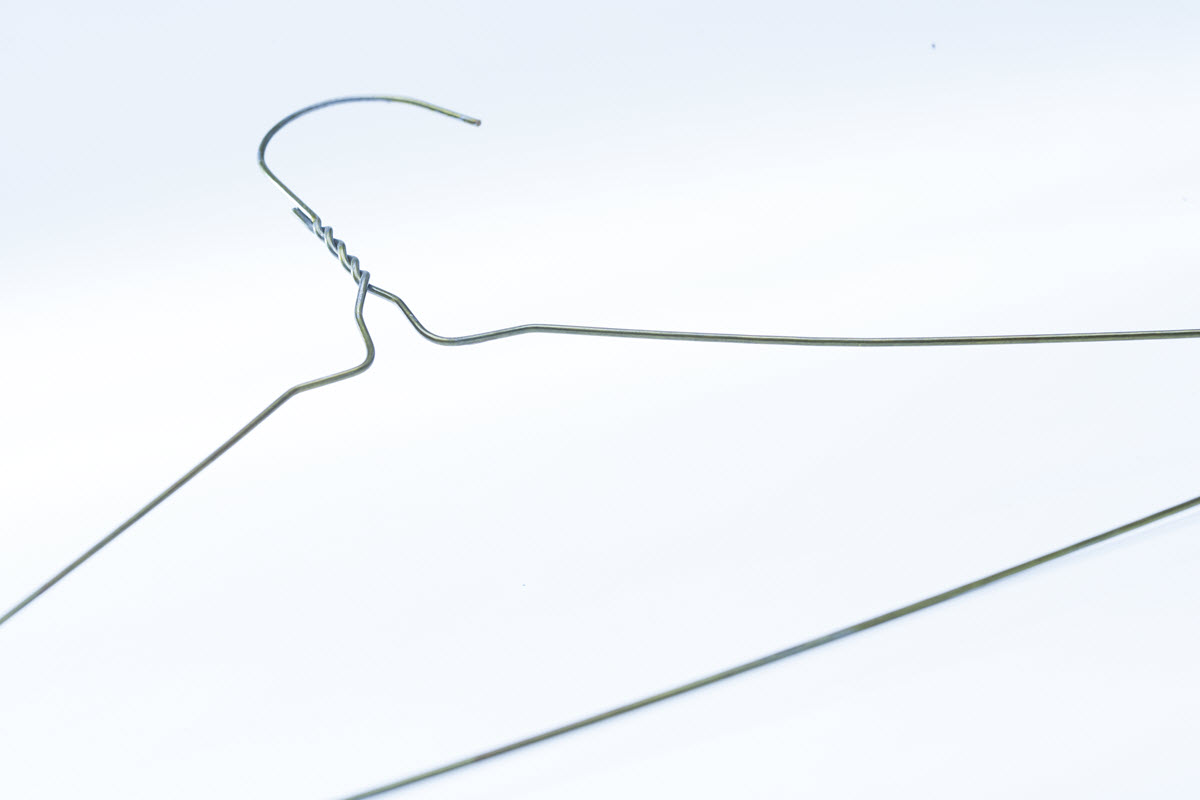
I've decided to become more practical this year and offer up ideas that people have been asking me. I recently got a surge of searches for how to recycle or reuse those pesky wire clothes hangers that we all have. Chances are good that you have more around your house than you have clothes to hang on them.
Although they are made of steel, most wire hangers have a petroleum polymer coating on them that makes recycling the metal more of a challenge. Check with your town’s program to check if they will accept these. If you live in an area that accepts wire hangers as part of curbside recycling, take advantage of it. You can also drop them off at scrap metal recycling facilities.
Because of this polymer coating, I wouldn't recommend using these to roast marshmallows, hot dogs, or 'smores. Besides, metal is a great heat conductor and you could get a nasty burn.
So for safe and useful ways to recycle them, drop them off at local dry cleaners and they will by reuse them again. While you’re there ask them to consider cutting down on their hangers. Our local dry cleaner now only folds items like sweaters, shirts, and blouses rather than put them on hangers, and packages them in paper bags that are easier to recycle.
You can give your hangers to any charity shop or second hand store. They use them for hanging clothes on their sale racks. You can also offer them up on Freecycle or similar web sites. Someone will want them and this will keep them out of the landfill.
Otherwise, reuse is a great option. I use wire hangers to support my ivy topiaries (see below). All you do is bend the hanger into a suitable form and then stick the hook end into some potted soil and wrap an ivy around the form. If you follow my blog, you'll have seen the peanut bird feeder wreath that I make for my backyard and also the autumn maple leaf wreath. But there are loads of other, more creative, ways to repurpose these hangers at home. You can use them in the garden, in the house and in your arts and crafts projects. Just use your imagination!
Of course, if you are an artist, wire coat hangers are just raw material for your latest project. Be inspired by this untitled sculpture of paper-clad wire hangers by Dan Steinhilbe.
| Posted at 05:56 AM on February 15, 2010 |
comments (2)
|
I've been doing a lot of clearing out lately and came across some of old shirts at the bottom of a cupboard. Delegated there no doubt by me for future recycling. So what do you do with old shirts besides ripping them up into rags? They're actually an amazing resource if you are a sewer or quilter. I used to turn old shirts into clothing for my daughter. When she got too big for that, I started to make bags and pillow covers out of them. Every bit of a shirt can be used - I have a friend who takes all the cuffs and collars I have left over and uses them to trim her quilts to create what she calls prairie point edgings!
Making pillow covers is fairly easy. You just iron out the shirt, do up the buttons and lay it out neatly on a flat surface inside out. Next you cut out a large square or rectangle (depending on the size of the shirt and your pillow inserts) through both layers. Then you simply sew up all around about 1/2 inches from the edge, open up the buttons, flip the shirt open and iron. Stuff in the pillow insert, do up the buttons and you're done.
| Posted at 04:52 AM on February 13, 2010 |
comments (0)
|

Only one day to go! If you still haven't got around to make or get something for your sweetheart(s), please consider some of these eco-friendly ideas. It's nice to give your special someone a treat on Valentine's Day but why not make it a day for our planet as well.
Pre-used Books
If your Valentine loves books, why not head for second-hand or charity shops to find something unique that has already been published. Whatever interests your Valentine has - recipes, gardening, crafts, music, cars, travel, mysteries, etc. - you can unearth a one of a kind book that is sure to please and you'll gain points for taking the time to find just the right one. (If you're rushed for time, ask the store staff to help out - they almost always know what's on the shelves and often can quickly find just what you are looking for.)
Local Organically Grown Flowers or Plants
Bypass large supermarket stores and chain florists and head for your own neighbourhood flower shop or the local farmer's market to find locally grown organic flowers. Many local smaller flower shops get their flowers daily from nearby greenhouse growers. They may not have roses, but will surely have plenty of spring flowers on hand for you to choose from. If no suitable flowers are available, opt instead for potted herbs or flowering plants. Or why not create a grow kit for your sweetie - put together some favourite flower or herb seeds, potting soil, etc. into a recycled container and wrap it up in piece of burlap or pretty fabric that can be reused later. Tie it all up with a pretty (used) ribbon.

Estate Jewelry
If you're in the market for a piece of jewelry for your Valentine or if you're planning to pop the question, you can find an amazing assortment of pre-owned vintage and antique jewelry including rings and earrings at local jewellers. Rings can redesigned and refitted as you like. And you have the satisfaction of knowing, you've caused no harm to the environment with your selection.
Organic Chocolates
Head for fair-trade shops for your chocolates and you will help out the economy in some of the world's poorest places and stay eco-friendly at the same time. Even a lot of larger supermarkets carry fair-trade organic chocolates. Always make these your choice.
Tree-friendly Valentine Cards
Making your own Valentine cards is easy, quick and cost-effective. Use whatever you have on hand. The one shown above was made from old playing cards, a discarded file folder, and an envelope made from a magazine.
| Posted at 05:25 AM on February 09, 2010 |
comments (0)
|
I've written a few articles with some ideas on how to recycle and repurpose what you already have in your closets and drawers and recycling bins to create unique and inexpensive Valentine's Day gifts. Most are easy enough for kids to make as well although an adult should be around to help out.
Recycle a Valentine Candy Box into a Vase
Last Minute Valentine’s Day Ideas
Cheap and Cheerful Valentine Projects
Recycle Old Books into Valentine’s Day Gifts
Recycle a Valentine Candy Box into a Clock
Homemade Valentine Recycling Crafts
More Homemade Valentine Recycling Craft Ideas
Make a Spice-covered Valentine Heart by Recycling Unused Spices
One of the nicest gifts you can give anyone is to tackle a chore they really dislike doing. In my case, it was always cleaning house and every Valentine's Day someone(??) went to a lot of trouble to see that everything was neat, clean and tidy on that day. It was really nice to come home to a sweet smelling home and know I wouldn't have to lift a finger to clean it at least for a few days. One year I even got a month's worth of house cleaning by a professional team of eco-cleaners. Try it. Think of something your Valentine really dislikes having to do and do it for them instead - whether it's the laundry, taking out the trash (make a commitment for a few weeks), ironing, cleaning out the garage, snow shovelling, etc. While you're at it, why not splash out and add a few vases (using clean bottles and jars) filled with herbs and a flower or two.
Happy Valentine's Day.
| Posted at 05:35 AM on February 06, 2010 |
comments (0)
|
Since my rant about my bamboo socks, I received a challenge from the folks at Bamboosa to test out a pair of their bamboo socks. According to Mo who sent me the comment, not all bamboo socks are created equal. Check out their website as it gives a lot of information regarding the cultivation and uses of bamboo. Lots of good looking items as well. I'll let you know the results of my test.
| Posted at 02:21 PM on January 26, 2010 |
comments (1)
|
Well, I decided to buy a few pairs of spanking new bamboo socks and what a disappointment. Costing twice as much as my 100% cotton socks (which are getting harder to find), these don't last a month before popping a hole. Ah well, all is not lost, they'll go into my neighbour's compost and get broken down for the garden. Don't waste your money. Did you know that you can compost anything if it's pure wool? My mom used to do that when our woolens were no longer possible to recycle.
| Posted at 10:18 AM on January 25, 2010 |
comments (0)
|
Here are a couple of more ways to recycle what you've got at home into clever Valentines for your sweethearts. If your Valentine loves gardening or is a great cook or even both, create a tiny lawn or herb garden for them by filling the bottom half of a tin or plastic heart-shaped candy box with potting soil and then sprinkling herb seeds on top. Cover seeds with a layer of soil and water. Place in a sunny window and wait for the seeds to sprout. Use catnip if you want a fast crop. Otherwise, herbs seeds will sprout in about a week to 10 days. Of course, you can always fake it with faux grass!
By the way, if you don't have a heart-shaped box, reuse whatever plastic or tin biscuit box you have.
If your Valentine has a sweet tooth, you can recycle empty glass or clear plastic jars by filling each and alternating layers of two or more of your sweetie’s favourite candy or chocolates. Tie with a ribbon and you’re done. Recycle whatever small jars you have on hand - if kids are making these up, use clear plastic jars like mayonaise jars. Be sure to clean the jars thoroughly before filling them up.
Both of these Valentine projects are kid friendly crafts and can be made at home or in the classroom. You can also fill them with just one type of sweet treat .
| Posted at 09:55 AM on January 19, 2010 |
comments (0)
|
I spotted this Valentine's Day idea for recycling a cardboard candy box into a pretty photo frame at the Kodak project website when I was looking for Valentine ideas and couldn't resist making my own version. Since I don't have a lot of patience with long instructions, I modified it to just a few simple steps.
All I did was take a tin heart-shaped chocolate box (the same kind I use for my clocks), cut out a favourite photo (a copy, not the original) to fit inside the bottom of the box and attached the lid to the back of the bottom but upside down (see photo). This makes the frame stand up. I used double-sided tape to hold the whole thing together. Easy, no??
You can use tin, plastic, or cardboard candy boxes for this project. A velvet covered cardboard one would be lovely. I also spotted some Valentine candy boxes covered in faux leather to resemble a football or soccer ball. Nice for the man in your life (and you can eat the chocolates if you like before you make the frame - shhhhh - no one needs to know that!).
| Posted at 03:16 PM on January 14, 2010 |
comments (0)
|
I've blogged before on how you can create envelopes and cards by recycling magazines and junk mail. Well, you can do the same with old calendars. Because the quality of the calendar pages is usually heavier, they're excellent for envelopes. It's not hard. You can also make gift bags, paper beads, book marks or use them as gift wrap for small gifts. If the pictures are really nice, why not frame a few?
Decoupage is another way to go. You can decoupage boxes, trays, flower pots; heck, I've even covered a chest of drawers in old calendar pages.